
When goods are shipped by air, most of the attention naturally falls on the flight itself. Where is the aircraft? When will it land? Has the shipment arrived on time?
But for businesses importing goods into the UK, landing is only part of the journey.
Between an aircraft touching down and a shipment reaching its final destination, several things need to happen. Cargo must be unloaded, processed, cleared through customs, collected from the airport and transported onwards. Depending on the shipment, it may also need to be stored, sorted or repalletised before delivery.
Understanding these stages can help businesses plan more effectively, avoid unnecessary delays and make better use of their air freight services.
1. Arrival and Cargo Handling
When an aircraft lands, its cargo doesn’t immediately become available for collection.
Goods are unloaded and transferred to the airline’s appointed cargo handling facility, where shipments are processed and prepared for release.
At major airports such as London Heathrow, cargo handling facilities manage freight arriving from destinations around the world. The process typically involves checking shipment documentation, recording arrivals and making goods available for collection once the relevant requirements have been met.
For consolidated air freight, individual consignments may also need to be separated and identified before they can be released to their respective importers or freight agents.
Why this matters: An aircraft’s arrival time is not necessarily the time its cargo will be ready for collection. Businesses arranging onward transport should account for handling and release procedures rather than relying on flight schedules alone.
2. Customs Clearance
Before imported goods can enter free circulation in the UK, the relevant customs formalities must be completed.
This generally involves submitting an import declaration to HM Revenue & Customs (HMRC), providing accurate shipment information and accounting for any applicable duties and taxes.
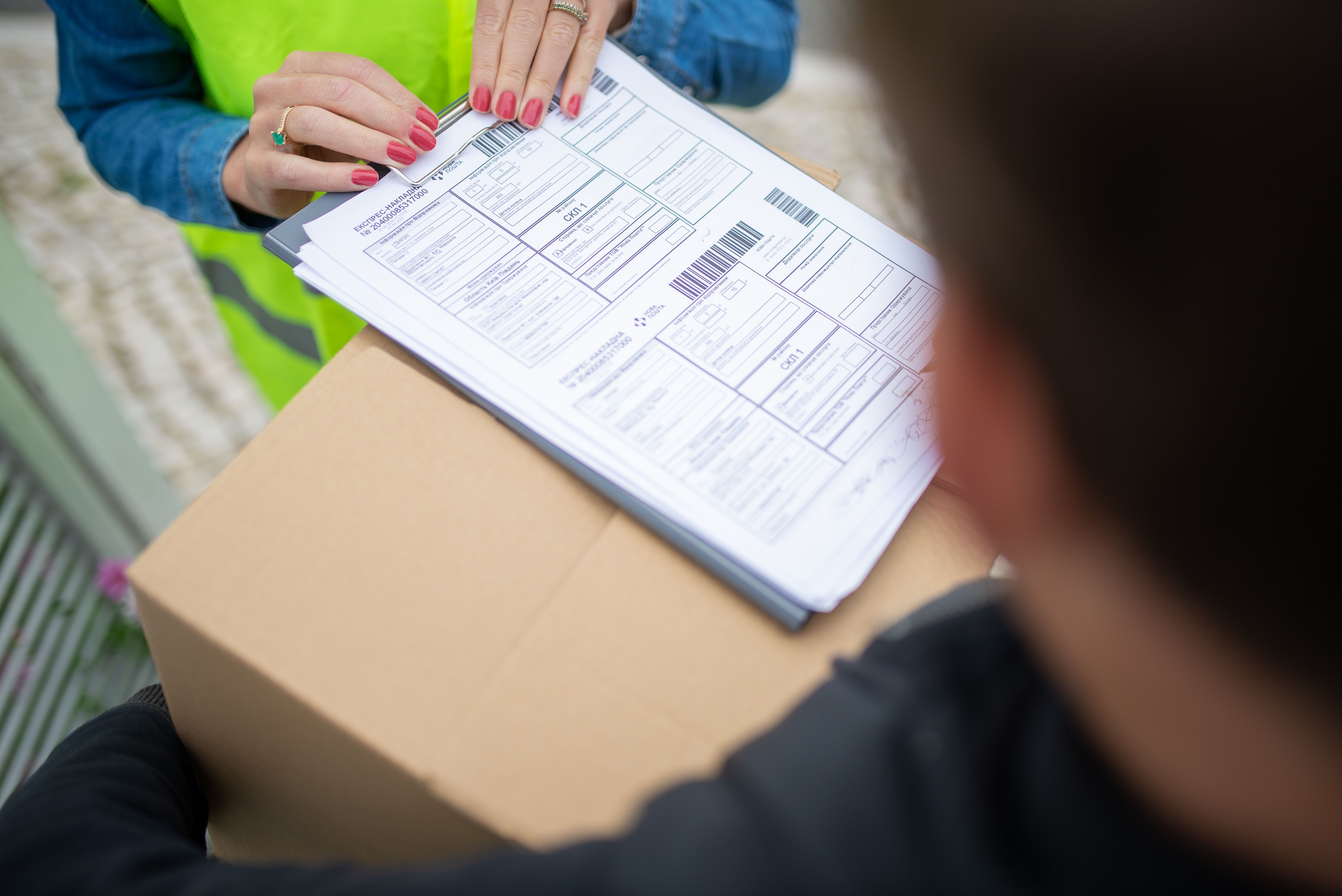
Common documentation includes:
- Commercial invoice: Details of the goods, their value, seller and buyer.
- Packing list: Information about the contents, quantities, packaging and weight.
- Air waybill (AWB): The transport document identifying the shipment and its movement by air.
- Commodity codes: Classifications used to determine applicable duties and other import requirements.
- Licences or certificates: Additional documents where required for particular goods.
Customs clearance can be arranged by the importer or an appointed customs agent.
Having documentation ready before arrival can make a significant difference. Missing information, incorrect classifications or outstanding payments may delay the release of goods.
Importantly, an airline’s confirmation that cargo has arrived does not mean customs clearance has been completed.
3. Airport Collection
Once the cargo is available and the necessary customs and handling release requirements have been satisfied, the next stage is collection.
This is where coordination between cargo handlers, freight forwarders and road transport providers becomes particularly important.
Depending on the airport and handling facility, collection may require an appointment, release reference, identification documents or other paperwork.
The collecting vehicle must also be suitable for the shipment.
A few cartons of urgently needed components may require a dedicated van, while several pallets of commercial goods could require a larger vehicle with appropriate loading capabilities.
Other practical considerations include collection opening hours, vehicle access restrictions, loading equipment and the dimensions of the freight.
Poor coordination can lead to unnecessary waiting, missed collection slots or additional handling and storage charges.
For businesses managing regular air freight arrivals, having a reliable airport collection arrangement helps make the transition from air transport to road transport more predictable.
4. Warehousing, Sorting and Pallet Rebuilding
Not every shipment needs to travel directly from the airport to its final destination.
Sometimes goods need to be temporarily stored, reorganised or prepared for onward distribution.
For example, a business importing goods for several retail locations may receive everything together under one air freight consignment.
Rather than delivering the entire shipment to one destination, the goods can be transported to a warehouse, separated by customer or location, and prepared for individual deliveries.
This can involve several activities:
Short-term storage: Holding goods securely until their intended delivery date or receiving location is ready.
Pallet rebuilding: Reorganising or repalletising goods to meet transport, handling or delivery requirements.
Sorting and consolidation: Grouping consignments for particular destinations or combining compatible shipments.
Cross-docking: Transferring goods from incoming transport to outgoing vehicles, with little or no long-term storage.
These activities can be particularly useful for retailers, distributors, manufacturers and businesses receiving mixed shipments from international suppliers.
The objective is straightforward: prepare the freight for the next stage of its journey without introducing unnecessary handling or delay.
5. Onward Transport and Final Delivery
Once a shipment is cleared, collected and prepared, it can begin the final leg of its journey.
This may involve a same-day dedicated vehicle, a scheduled delivery service or a larger distribution operation serving multiple locations.
The appropriate transport option depends on several factors, including shipment size, delivery urgency, destination, access restrictions and the customer’s receiving arrangements.
For time-sensitive consignments, dedicated transport can provide a more direct route to the delivery location.
For less urgent shipments, consolidated or scheduled road freight may offer a more economical alternative.
Delivery planning should also account for practical requirements at the destination. Some premises operate restricted receiving hours, require advance booking or have limited unloading facilities.
Even when the air freight journey has gone smoothly, these final arrangements can affect when the goods actually reach the customer.
A completed delivery, supported by proof of delivery where applicable, marks the end of the physical transport process.
6. Why Coordination Matters
Air freight is often chosen because speed matters.
Businesses may be importing production components, replenishing stock, fulfilling customer orders or replacing urgently needed equipment.
Yet the benefits of fast international transport can be reduced when the arrangements after arrival are poorly coordinated.
Consider a shipment arriving at Heathrow on schedule but requiring collection, repalletisation and delivery to several locations across the country.
The aircraft may have completed its journey exactly as planned. However, the overall delivery still depends on customs clearance, cargo availability, suitable vehicles, warehouse capacity and delivery scheduling.
Planning these stages together, ideally before the aircraft arrives, helps identify potential complications early.
It also provides a clearer picture of the shipment’s total journey, rather than treating the flight and subsequent delivery as unrelated activities.
From Arrival to Delivery with Transportify
At Transportify, we understand that moving goods by air is only one part of getting them where they need to be.
Our freight and logistics services cover air freight, customs clearance, road transport and warehousing, helping businesses coordinate the different stages of their supply chains.
Whether you need an airport collection, temporary storage, pallet rebuilding or onward delivery across the UK, having the right arrangements in place can make the process considerably easier.
Have an air freight shipment arriving in the UK? Get in touch with Transportify to discuss the collection, handling and onward delivery requirements for your cargo.